


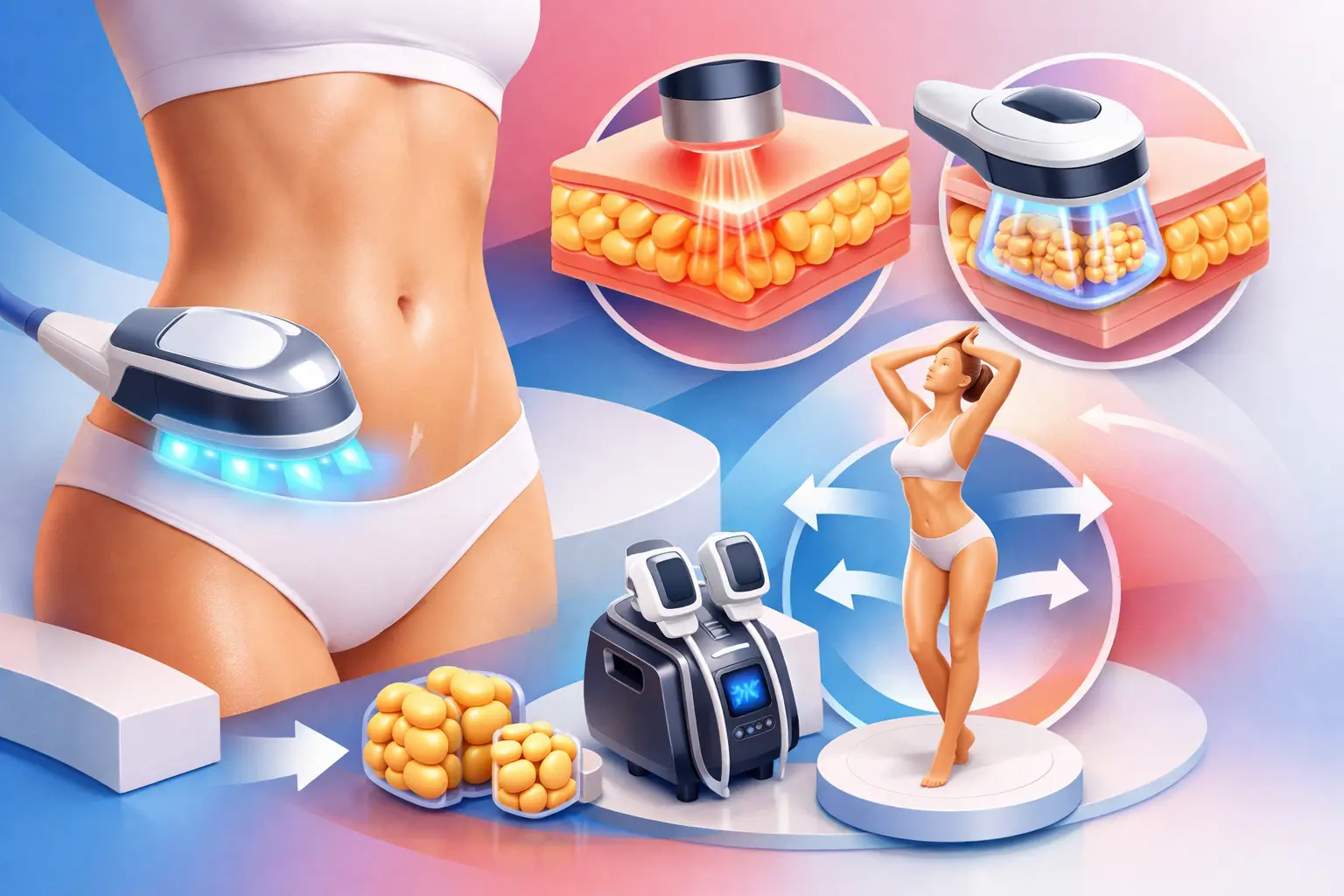
How Body Contouring Reduces Stubborn Areas

That lower tummy pouch that remains despite regular workouts. The thighs that seem unchanged even when your clothes fit better elsewhere. The area beneath the chin that feels out of proportion in photos. These are the concerns that bring many clients through our doors, and they are often more frustrating because they are not a sign of a lack of effort.
Understanding how body contouring reduces stubborn areas starts with one clear distinction: it is not designed to replace weight loss. Non-surgical body contouring is a targeted approach to improving the shape, tone and appearance of specific areas that may not respond as you would like to diet and exercise alone.
Why do stubborn areas hold on to fat?
The body does not lose fat evenly or on command. Genetics, hormones, age, stress, sleep, medication and your natural body shape all influence where fat cells tend to store energy. For some people, this is around the abdomen and flanks. For others, it may be the upper arms, thighs, back or beneath the chin.
Exercise can strengthen the muscles beneath an area, and a balanced calorie deficit can reduce overall body fat, but neither can guarantee fat loss from one chosen place. This is why hundreds of sit-ups may improve core strength without necessarily changing a lower-abdomen contour in the way you hoped.
Stubborn areas can also be affected by skin quality. When skin has lost some elasticity through ageing, pregnancy or changes in weight, a small pocket of fat can appear more noticeable. A treatment plan may therefore focus on fat reduction, skin tightening or a combination of both, depending on what is actually creating the concern.
How body contouring reduces stubborn areas safely
Body contouring treatments use carefully selected technologies to target the tissue beneath the skin without surgical incisions or a lengthy recovery period. The right method depends on the area, the amount of pinchable fat, skin laxity and your personal goals.
At SculptSure, treatment planning begins with a one-to-one consultation rather than a one-size-fits-all package. This matters because the most effective treatment for a firmer abdomen may not be the best choice for loose skin on the arms or texture concerns on the thighs.
Targeting localised fat cells
Certain non-surgical technologies, including cavitation-based treatments, are used to support the breakdown of localised fat in selected areas. Ultrasound energy is applied externally, with the aim of disrupting fat-cell membranes. The body then processes the released contents naturally through its normal metabolic and lymphatic systems.
This does not mean fat simply disappears during an appointment. Changes develop gradually, and a course of treatments is commonly recommended to build a visible result. Results also vary between clients. Someone already near their stable, healthy weight with a defined pocket of fat may see a more noticeable contour change than someone looking for a large overall reduction.
Encouraging a smoother, firmer finish
Fat reduction alone is not always the whole answer. If the skin is lax, reducing volume without supporting skin quality can leave the area looking less refined than expected. Skin-tightening treatments use controlled energy to warm deeper layers of the skin, encouraging collagen production and improved tissue firmness over time.
Collagen is the protein that helps give skin its supportive structure. As new collagen develops, the skin may feel firmer and look smoother. This process is gradual, so results tend to continue developing in the weeks after treatment rather than appearing instantly.
For clients concerned with cellulite or uneven texture, body contouring may also support a smoother-looking surface. Cellulite is very common and is influenced by connective tissue, fat distribution and skin thickness. It is not a measure of fitness or body weight, and no non-surgical treatment should be presented as a permanent cure. However, improving circulation, skin firmness and localised volume can improve the appearance of the area for some clients.
Supporting the body’s natural processes
Many contouring appointments are paired with practical aftercare, such as staying well hydrated, keeping active and following the recommended treatment schedule. These steps do not replace the treatment, but they support general circulation and help you maintain the improvements you work towards.
Some clients also choose massage-led treatments as part of a wider self-care plan. These can feel restorative and may support temporary fluid movement and a sense of lightness, particularly where bloating or water retention contributes to how an area looks. They should not be confused with permanent fat loss, but they can complement a considered plan.
The areas body contouring can treat
Non-surgical contouring is commonly considered for the abdomen, waist, flanks, thighs, upper arms, back and under-chin area. The best candidates are usually adults with localised, pinchable fat or mild-to-moderate skin laxity who want a more sculpted appearance without surgery.
The treatment is especially useful when the goal is refinement rather than a dramatic change on the scales. You may notice that a waistband sits more comfortably, an arm feels firmer in sleeveless clothing or the outline of your waist looks more defined. These changes can be meaningful, even when your weight remains broadly similar.
A consultation should also identify when body contouring is not the right first step. Significant weight loss goals, a large amount of loose skin or certain medical concerns may require a different approach. Honest advice protects both your safety and your expectations.
What results can you realistically expect?
The most satisfying results tend to come from clear, realistic expectations. Body contouring can reduce the appearance of stubborn areas and improve shape, but it cannot recreate a surgical result or change your underlying anatomy. It is an enhancement treatment, not a shortcut to an entirely different body.
Most clients need a course of sessions, spaced according to the chosen treatment and the body area. Your practitioner will assess progress throughout rather than treating indefinitely. Measurements, photographs and how clothing feels can all be more useful indicators than the number on the scales.
Results are also easier to maintain when your weight is relatively stable. Fat cells treated through certain technologies may be reduced, but remaining fat cells can still enlarge if there is significant weight gain later. A balanced routine is not about perfection. It is about giving your result the best chance of lasting.
Safety should shape every treatment plan
Non-surgical does not mean suitable for everyone. A professional consultation should cover your medical history, current medication, previous procedures, skin condition and any relevant concerns before treatment is recommended. Pregnancy, breastfeeding, some implanted devices, active skin infections and specific health conditions may mean treatment needs to be postponed or avoided.
You should feel comfortable asking what technology will be used, what sensation to expect, how many sessions may be advised and what side effects are possible. Depending on the treatment, temporary warmth, redness, tenderness or mild swelling can occur. These are often short-lived, but your practitioner should explain aftercare and when to get in touch if something does not feel right.
A nurse-led setting adds valuable clinical perspective to this process. The aim is not to sell the most appointments. It is to choose an appropriate treatment, set achievable goals and make sure your wellbeing comes first.
Making your treatment work harder for you
The most successful body contouring plans fit into real life. Arrive well hydrated, follow your practitioner’s aftercare, keep moving in ways you enjoy and avoid chasing rapid changes from one session. If your goal includes weight reduction, medically guided weight-loss support can sit alongside contouring to help you address both overall progress and those final resistant areas.
Most importantly, choose treatment because you want to feel more comfortable and confident in your own body, not because you are aiming for someone else’s shape. A thoughtful consultation can turn a vague frustration into a clear plan, with treatment choices that respect your body, your schedule and the result you genuinely want to see.


Comments